
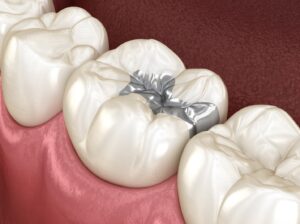
Metal fillings have been a staple of restorative dentistry for centuries. Since the 1800s, dentists have largely turned to amalgam because of its accessibility and strength. These days, though, dental practices are moving towards composite options when it comes to filling cavities and other restorations. If you’ve had metal fillings in the past that are just about due for an upgrade, read on to learn why it may be the perfect time to replace them with a tooth-colored filling.
What Are Amalgam Fillings?
Amalgam is a dental material that’s a mix of mercury and other metals like silver, copper, tin, and zinc. Mercury is the chief ingredient, typically accounting for about half of an amalgam filling’s weight.
Amalgam has served dentists and patients well for a very long time when it comes to tooth fillings. Its durability makes it a natural fit for back teeth that do a lot of the heavy lifting or for teeth with large cavities.
OK, So What are the Downsides to Amalgam Fillings?
There are several drawbacks to consider when getting an amalgam filling.
They’re Very Noticeable
Amalgam fillings in the molars where chances are good that no one will notice them? Most people can live with that. But if you need a shiny silver filling in your front teeth? That can be a problem for some patients.
This is a major advantage for tooth-colored fillings. They’re made from composite resin, a material that can be blended and shaded to match tooth enamel exactly!
They Raise Mercury Concerns
Next to cosmetic appeal, the other chief concern cited with amalgam fillings is their mercury content.
The Food and Drug Administration notes that certain groups, including pregnant women, nursing mothers, and people with specific medical conditions, may be advised to avoid new amalgam fillings when appropriate alternatives are available.
They’re a Sensitive Bunch
Metal fillings are much more susceptible to extreme temperatures because they’re, well, made in part from metals. Amalgam expands and contracts in response to temperature changes. Repeated exposure to very hot and cold foods and beverages can place stress on the surrounding tooth structure over time. In some cases, this may contribute to cracks or fractures.
The Advantages of Tooth-Colored Fillings
Unlike amalgam fillings, composite resin does not pose a high-visibility risk. In fact, tooth-colored fillings blend in seamlessly with the rest of your smile, to the point that, unless you tell them yourself, your friends and family probably wouldn’t notice any difference!
Another advantage is that composite resin bonds directly to your tooth structure. This bonding process can help preserve more healthy enamel and dentin because less tooth structure may need to be removed compared with traditional amalgam preparations. The restoration can also provide additional support to the remaining tooth structure.
Furthermore, composite fillings are mercury-free, making them appealing to patients who prefer to avoid dental materials containing mercury. They are also versatile and can repair cavities, chips, and other minor tooth damage.
If you’re ready to say goodbye to the metal in your mouth, talk to your dentist about tooth-colored alternatives!
About the Practice
Moulton Dentistry of Hoover proudly offers tooth-colored fillings if you have a tooth that needs restoring. Our durable composite resin materials offer better esthetics, and our team guarantees patience and comfort when treating you, especially for younger patients. Contact us online or call (205) 988-3360.